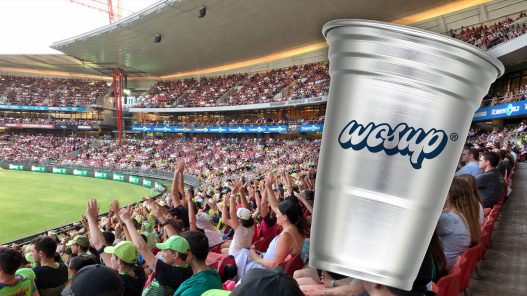
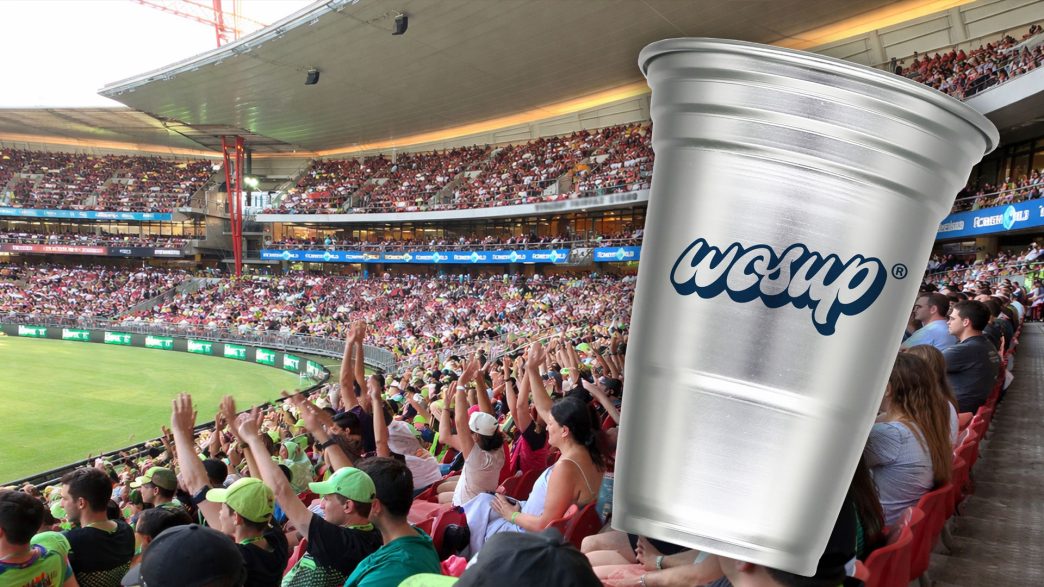
When 30,000 fans order a drink at a stadium, few think about what happens to the cup in their hand.
When they leave, most of it will end up in landfill.
For decades, single-use cups have been invisible infrastructure at live events – cheap, convenient and environmentally costly. Now, one Australian startup is betting that the future of stadiums isn’t disposable at all. 
WOSUP, a circular economy venture focused on large-scale reusable cup systems, has already helped deliver what’s believed to be an Australian first: a major stadium switching to reusable cups for every pour at ENGIE Stadium. And investors are taking notice.
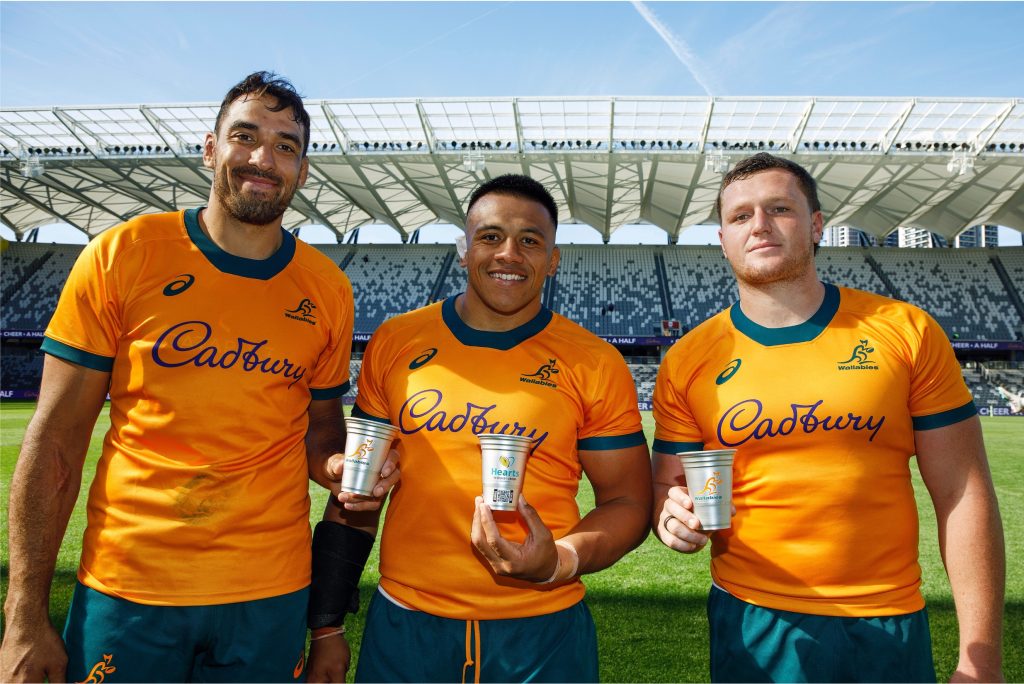
The company has raised more than $200,000 via an equity crowdfunding campaign on Birchal, capital it says will help scale reusable infrastructure across more venues nationwide.
Founder Martin Salter believes the shift isn’t ideological – it’s operational.
“Together, we’re proving reusable cups work at scale, even in high-volume, high-pressure environments like major sporting and live event venues,” Salter said.
Rather than positioning reusable cups as a feel-good environmental add-on, WOSUP frames them as operational systems, designed to integrate seamlessly into venue logistics. The model includes durable branded cups, structured return systems, commercial washing capacity and data reporting to help venues quantify waste reduction and emissions impact.
In other words: less greenwashing, more systems thinking.
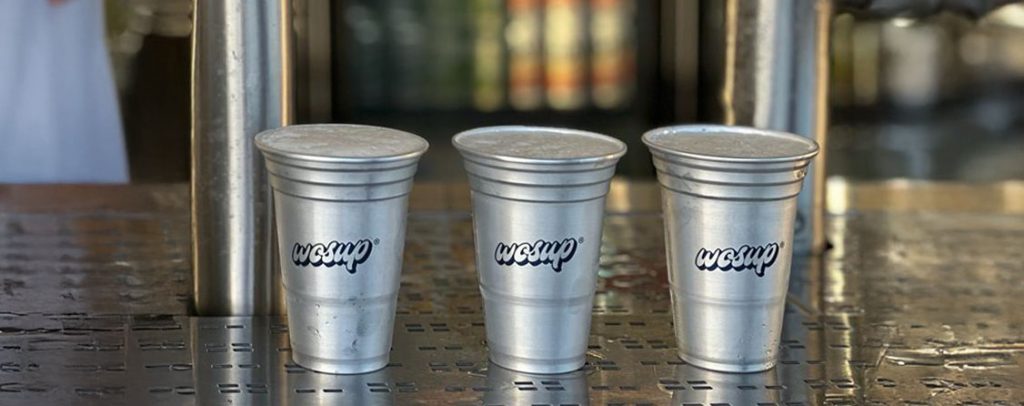
At ENGIE Stadium, thousands of fans will be served drinks in reusable cups without slowing service or disrupting the fan experience. For operators, that’s the real test. Sustainability initiatives rarely fail because of intent they fail because they disrupt throughput, staffing or revenue.
Head of Food & Beverage at Sydney Showground, James Farr said he is thrilled to test out the new wine and spirit cup as the team continue to strive to make the venue more sustainable.
“Event sustainability is a major focus for us at Sydney Showground and WOSUP continues to provide practical and effective solutions, like the new reusable wine and spirit cups, that help us reduce waste while delivering a better consumer experience for our guests,” Farr said.
The timing aligns with broader market forces. ESG commitments are no longer optional for major organisations. Regulatory pressure around single-use plastics is increasing. And consumers – particularly younger demographics – expect visible environmental action from the brands and venues they support.
Globally, reuse models are gaining traction across hospitality and events. In Australia, the infrastructure layer has lagged. WOSUP is positioning itself not just as a supplier, but as a category builder, creating the logistics backbone that enables reuse at scale.
For investors, that infrastructure play is key. While the current raise is modest by venture capital standards, it signals retail appetite for impact-driven businesses with tangible, operational deployment, not just software platforms.
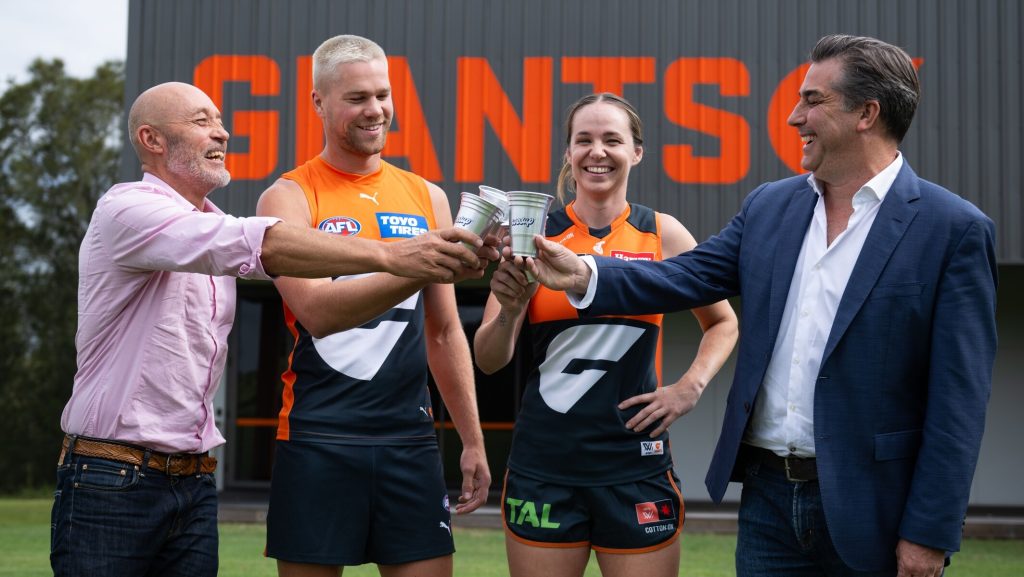
The live events industry generates millions of single-use cups annually. Replacing even a fraction of that volume represents a significant commercial and environmental opportunity. But success will depend on execution, scaling washing capacity, managing logistics, and convincing operators that circular systems can outperform disposable convenience.
Martin Salter sees this as the beginning of a structural shift.
“When you take single-use cups out of service, the impact is immediate and visible. We’re on a mission to make reuse the new normal for millions of Australians, proving sustainability can go hand in hand with great hospitality at our biggest and best venues.”
If that happens, the humble stadium cup may become a case study in how sustainability moves from marketing promise to built-in business infrastructure.